



- NEW DVD Series – Stone Setting with Bezels
- Tube Set Charm by Kim St. Jean
- Prong Basket Pendant by Kim St. Jean
- NEW DVD Series – Stone Setting with Cold Connections
- New DVD Series – Stone Setting with Wire
- NEW DVD Series: Introduction to Stone Setting by Kim St. Jean
- Featured Tool: Bracelet Bending Plier
- NEW Dvd by Eva Sherman
- Fun, Fast Fold Forming DVD Series
- Double Band Ear Cuff from Alex Simkin
Daily Wire Tip March 8: How to Determine if Pattern Uses Flat or Round Wire

Daily Wire Jewelry Making Tip
March 08, 2010
Question:
If the instruction says 20-gauge dead soft wire or 26-gauge dead soft wire, how do you know if you use flat, round etc.
Answer:
If you have a picture of the finished project, you should be able to figure out which shape the wires need to be by looking at the gauges; remembering smaller wire sizes are written in larger numbers and vice versa. More often than not, 26g or larger numbered wire means small to very fine, Round wire (as 24g is about the smallest square you can readily purchase). If you still have a challenge, directly contact either the publisher or the author of the questionable directions.
Answer contributed by Dale “Cougar” Armstrong
Have a question? Submit your question here
Related Posts


3 Comments

Wire Jewelry Ideas
-
 See Yourself as a Creative Thinker-Part IV By Karen Meador, PhD
Wire Jewelry Article for September 27th, 2017 If...
- September 27, 2017
-
 See Yourself as a Creative Thinker-Part III By Karen Meador, PhD
Wire Jewelry Article for September 20th, 2017 If...
- September 20, 2017
-
 See Yourself as a Creative Thinker-Part II By Karen Meador, PhD
Wire Jewelry Article for September 13th, 2017 If you...
- September 13, 2017
-
 See Yourself as a Creative Thinker By Karen Meador PhD
Wire Jewelry Article for September 6th, 2017 This is...
- September 6, 2017

Design & Inspiration
-
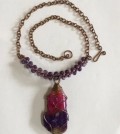 Free Pattern: Smile Cluster Necklace by Karen Meador
by Judy Ellis, Wirejewelry.com Wire Jewelry Pattern for August...
- August 7, 2017
-
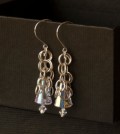 Free Pattern: Long crystal round maille earrings by Kylie Jones
by Judy Ellis, Wirejewelry.com Wire Jewelry Pattern for August...
- August 3, 2017
-
 Free Pattern: Stone Twist Wrap by Karen Meador
by Judy Ellis, Wirejewelry.com Wire Jewelry Pattern for July...
- July 31, 2017
-
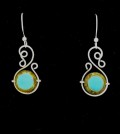 Free Pattern: Floating Bead Earrings By Kimberly Newman
by Judy Ellis, Wirejewelry.com Wire Jewelry Pattern for July...
- July 27, 2017
Featured Tools
-
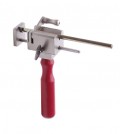 Get to Know Your Hand Tools – Tube-Cutting Jig By Helen I. Driggs
by Judy Ellis, Wirejewelry.com Wire Jewelry Tip for August...
- August 4, 2017
-
 Wire Jewelry Video: Using Punch Pliers by Judy Freyer Thompson
by Judy Ellis, Wirejewelry.com Wire Jewelry Tip for August...
- August 2, 2017
-
 Wire Jewelry Video: Aligning a Hole Punch by Judy Freyer Thompson
by Judy Ellis, Wirejewelry.com Wire Jewelry Tip for July...
- July 26, 2017
-
 Get to Know Your Hand Tools – Wire Cutters – Helen I. Driggs
by Judy Ellis, Wirejewelry.com Wire Jewelry Tip for July...
- July 25, 2017
Mary
March 8, 2010 at 1:28 pm
Don’t you hate it when some writers of tutorials “assume” you know the type of wire, its size, etc.? For example,when it comes to “coiling” around a larger round sized wire, it is automatically assumed you will use 26 or 28 gauge round wire. This is because the technique is being done by so many today, that the assuming part is there and it is very confusing for beginners with any kind of wire projects. I’ve noticed several patterns myself, where the author figures you (the student) already know what they are talking about! Sad.
Dale is right in her answer to you. I had the hardest time learning that the bigger the gauge, the smaller the actual wire size.
nancy beegle
March 8, 2010 at 7:56 pm
I agree —
Dale has put it as aptly as possible, as usual. Another thing you may want to try (keeping in mind what she has already said about the guages being smaller, the larger the number) is that when you look at a picture of a finished project, you can often tell whether or not something is wrapped in round or square ‘half hard’ wire, by paying close attention to the shapes of the wraps. The more projects you see finished in which you know the shapes of the wires, the easier it becomes for you to discern the shapes by looking. Also, something which may encourage you is that as you grow in experience, you’ll be able to just decide for yourself what size and shape/temper, etc., to use in your own projects, or even to make alterations to any given design to suit your purposes. (With experience!)
Keep in mind, does take time and practice, but with that, and a positive attitude, you’ll get there!
dalecgr
March 9, 2010 at 12:51 am
Yes Nancy, unless one has great tool skills, sometimes a soft wire will not have the same crisp angles as a half-hard does. This is one of the ways that I personally determine what temper a wire is, when looking at a picture of a design. (Note I said ‘sometimes’.)