



- NEW DVD Series – Stone Setting with Bezels
- Tube Set Charm by Kim St. Jean
- Prong Basket Pendant by Kim St. Jean
- NEW DVD Series – Stone Setting with Cold Connections
- New DVD Series – Stone Setting with Wire
- NEW DVD Series: Introduction to Stone Setting by Kim St. Jean
- Featured Tool: Bracelet Bending Plier
- NEW Dvd by Eva Sherman
- Fun, Fast Fold Forming DVD Series
- Double Band Ear Cuff from Alex Simkin
All posts tagged "beads"
-
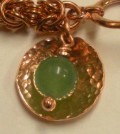 Featured Patteren: Bead Charm
by Judy Ellis, Wirejewelry.com Wire Jewelry Pattern for August 10th 2016 Bead Charm by Judy Larson Today we have a simple and yet versatile pattern for a Bead Charm that can be created easily by any beginner...
- Posted August 10, 2016
-
Live from Tucson – Use a File
Daily Wire Jewelry Tip February 6, 2015 Live from Tucson 2015 If you’ve been following our blog, you know that we are partnering with our sister company JewelryTools.com and offering over 100 classes in Tucson at the...
- Posted February 6, 2015
-
Wire Jewelry Tip October 23: Beading A-B-C’s
by Narlene Allen, Wire-Sculpture.com Wire Jewelry Tip of the Day for October 23, 2013 Beading A-B-C’s Whether you are a beginner or experienced beader, it’s always good to know the basics. This week we’ll explore the A-B-C’s...
- Posted October 23, 2013
-
New Gemstone Beads Inspire Amazing Jewelry!
by Rose Marion, Wire-Sculpture.com Wire Jewelry Resource for May 29, 2013 New Gemstone Beads Inspire Amazing Jewelry! When we got in our new stock of exquisite gemstone beads, we sent Albina Manning and Judy Larson a few...
- Posted May 29, 2013
-
Jewelry Resource Dec. 12: Birthstones and Gemstones
by Rose Marion, Wire-Sculpture.com Wire Jewelry Resource for December 12, 2012 Birthstones Every little girl learns her birthstone, so she can feel like she’s wearing jewelry that’s made just for her. Now as a wire jewelry artist,...
- Posted December 12, 2012
-
Wire Jewelry Resource: How Many Beads in a Strand?
by Rose Marion, Wire-Sculpture.com Wire Jewelry Resource for February 29, 2012 When I was in Tucson, beads were everywhere! And for the most part, they weren’t loose, or in bags, but tied on strands of fishing line...
- Posted February 29, 2012
-
Daily Wire Tip July 5: Large Hole Pearls for Wire Bracelets
Daily Wire Jewelry Making Tip for July 5, 2011 Question: Dear Dale: Thank you for your clear teaching style; your directions are the best! I’ve been looking at the Pearl Link Bracelet video (one of the series...
- Posted July 4, 2011
-
Daily Wire Tip May 10: Organizing Beads for Easy Jewelry Making
Daily Wire Jewelry Making Tip for May 10, 2011 Question: Dale, how do you organize your beads? I’m now doing it by color. Do you have any suggestions? -Ni in Columbus, Ohio Answer: The choice is up...
- Posted May 9, 2011
-
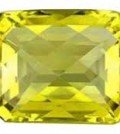 Daily Wire Tip Apr. 17: Is Fruit Quartz Really Quartz?
Daily Wire Jewelry Making Tip for April 17, 2011 Question: Hi Dale, I love that your instructional style is so clear and concise. It really helps me create an impressive first try! I read recently that fruit...
- Posted April 16, 2011
-
Daily Wire Tip Feb. 26: What Are Pinch Beads?
Daily Wire Jewelry Making Tip for February 26, 2011 Question: I just received the March issue of a beading magazine. One of the designs calls for “pinch beads.” What are pinch beads? How are they different, and...
- Posted February 25, 2011
-
Daily Wire Tip Jan. 17: Pricing Jewelry by the Carat Weight
Daily Wire Jewelry Making Tip for January 17, 2011 Question: I am creating some black onyx jewelry for an arts and crafts festival: a kind of simple design, mostly black onyx strung on bead wire with a...
- Posted January 16, 2011
-
Daily Wire Tip Jan. 13: Large Hole Pearls for Necklaces
Daily Wire Jewelry Making Tip for January 13, 2011 Question: I would like to use pearls to make a leather knotted necklace. Where would I find pearls that I could use? -Judy in Monroe, Louisiana Answer: Hi...
- Posted January 12, 2011
-
Daily Wire Tip Dec. 1: Donut Beads for Earrings
Daily Wire Jewelry Making Tip for December 1, 2010 Question: Where can I find the open circle beads used in the "15 Minute Earrings" jewelry idea? -Sheila in Swoyersville, Pennsyvania Answer: Hi Sheila, with the new categories...
- Posted November 30, 2010
-
Daily Wire Tip Nov. 24: Metal Beads for Ear Wraps
Daily Wire Jewelry Making Tip for November 24, 2010 Question: My daughter is allergic to most metals. I want to make her a pair of ear wraps for Christmas. I have some niobium wire. Is there anything...
- Posted November 23, 2010
-
Daily Wire Tip Nov. 6: Bead Reaming & Searching the Blog
Daily Wire Jewelry Making Tip for November 6, 2010 Question: Hello, I been looking everywhere for the video that has a tool that make the holes in a gemstone a little bigger without breaking it. It’s been...
- Posted November 5, 2010
-
Daily Wire Tip Nov. 4: Kiwi Lapis and Chinese Turquoise
Daily Wire Jewelry Making Tip for November 4, 2010 Question: What are Chinese Turquoise and Kiwi Lapis? My customers always ask me if this is “real” turquoise or “real” lapis, and I don’t know the answer. Thanks!...
- Posted November 3, 2010

Wire Jewelry Ideas
-
 See Yourself as a Creative Thinker-Part IV By Karen Meador, PhD
Wire Jewelry Article for September 27th, 2017 If...
- September 27, 2017
-
 See Yourself as a Creative Thinker-Part III By Karen Meador, PhD
Wire Jewelry Article for September 20th, 2017 If...
- September 20, 2017
-
 See Yourself as a Creative Thinker-Part II By Karen Meador, PhD
Wire Jewelry Article for September 13th, 2017 If you...
- September 13, 2017
-
 See Yourself as a Creative Thinker By Karen Meador PhD
Wire Jewelry Article for September 6th, 2017 This is...
- September 6, 2017

Design & Inspiration
-
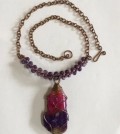 Free Pattern: Smile Cluster Necklace by Karen Meador
by Judy Ellis, Wirejewelry.com Wire Jewelry Pattern for August...
- August 7, 2017
-
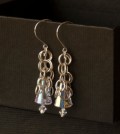 Free Pattern: Long crystal round maille earrings by Kylie Jones
by Judy Ellis, Wirejewelry.com Wire Jewelry Pattern for August...
- August 3, 2017
-
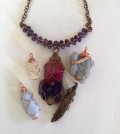 Free Pattern: Stone Twist Wrap by Karen Meador
by Judy Ellis, Wirejewelry.com Wire Jewelry Pattern for July...
- July 31, 2017
-
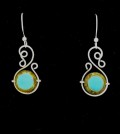 Free Pattern: Floating Bead Earrings By Kimberly Newman
by Judy Ellis, Wirejewelry.com Wire Jewelry Pattern for July...
- July 27, 2017
Featured Tools
-
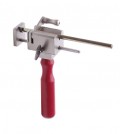 Get to Know Your Hand Tools – Tube-Cutting Jig By Helen I. Driggs
by Judy Ellis, Wirejewelry.com Wire Jewelry Tip for August...
- August 4, 2017
-
 Wire Jewelry Video: Using Punch Pliers by Judy Freyer Thompson
by Judy Ellis, Wirejewelry.com Wire Jewelry Tip for August...
- August 2, 2017
-
 Wire Jewelry Video: Aligning a Hole Punch by Judy Freyer Thompson
by Judy Ellis, Wirejewelry.com Wire Jewelry Tip for July...
- July 26, 2017
-
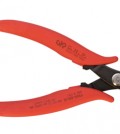 Get to Know Your Hand Tools – Wire Cutters – Helen I. Driggs
by Judy Ellis, Wirejewelry.com Wire Jewelry Tip for July...
- July 25, 2017