



- NEW DVD Series – Stone Setting with Bezels
- Tube Set Charm by Kim St. Jean
- Prong Basket Pendant by Kim St. Jean
- NEW DVD Series – Stone Setting with Cold Connections
- New DVD Series – Stone Setting with Wire
- NEW DVD Series: Introduction to Stone Setting by Kim St. Jean
- Featured Tool: Bracelet Bending Plier
- NEW Dvd by Eva Sherman
- Fun, Fast Fold Forming DVD Series
- Double Band Ear Cuff from Alex Simkin
All posts tagged "cubic zirconia"
-
Gem Profile Apr. 12: Diamond
by Layna Palmer, Wire-Sculpture.com Diamond Shop Diamond CZ Stones | Shop Quartz Gems | Shop White Topaz Gems “Diamonds are Forever” is a phrase you have heard from DeBeers to James Bond, and it fits, because diamonds...
- Posted April 12, 2013
-
Gem Profile Nov. 30: Zircon
by Layna Palmer, Wire-Sculpture.com Zircon (and Cubic Zirconia) Shop the Cubic Zirconia Rainbow Last week we explored space and some space-age technology a little with Moissanite so this week we decided to come back to earth and...
- Posted November 30, 2012
-
Gem Profile Nov. 23: Moissanite
by Layna Palmer, Wire-Sculpture.com Moissanite Shop "Diamond" Cubic Zirconia The Gem Profile for this week starts with a question: what do Arizona, North Carolina, and outer space have in common? If you answered a beautiful, near-colorless stone...
- Posted November 23, 2012
-
Wire Jewelry Idea: Mother’s Ring
by Rose Marion, Wire-Sculpture.com Wire Jewelry Idea for February 1, 2012 Name: Jennifer’s Mother Ring Submitted by: Joan Huck Technique used: snapsets, ringmaking Materials used: 20-gauge square sterling silver wire Citrine and Garnet CZs Snapsets Ring mandrel...
- Posted February 1, 2012
-
Daily Wire Tip Mar. 22: Tumbling Lucky CZ Stones
Daily Wire Jewelry Making Tip for March 22, 2011 Question: I recently bought some CZ multi colored Lucky Stones and they are truly breathtaking. My question is, will I be able to tumble them in my tumbler...
- Posted March 21, 2011
-
Daily Wire Tip: Determine Gemstone Authenticity at Home
Daily Wire Jewelry Making Tip Question: What are some of the ways I can tell a real gemstone from a CZ or synthetic stone? I would just like a few hints that I can use such as...
- Posted March 18, 2011
-
Daily Wire Tip Feb. 27: Simulated and Cubic Zirconia Stones
Daily Wire Jewelry Making Tip for February 27, 2011 Question: What’s the difference between simulated stones and Cubic Zirconia Stones? -Robert in California, Maryland Answer: In many cases, simulated stones are made of faceted glass. Glass is...
- Posted February 26, 2011
-
Daily Wire Tip Jan. 15: More About Multicolored CZs
Daily Wire Jewelry Making Tip for January 15, 2011 Question: I’m very interested in the Lucky Stone multi colored CZs. I finally figured out the light and dark difference. Will there be a consistent color in them?...
- Posted January 14, 2011
-
Daily Wire Tip: Gemstone Information & Resources
Daily Wire Jewelry Making Tip Question: I meet a lot of people who do not understand the difference between a lab-grown gem, which has the same crystalline structure and chemical composition as a mined gem, and a...
- Posted January 8, 2011
-
Daily Wire Tip Jan. 4: About Lucky Stone CZs
Daily Wire Jewelry Making Tip for January 4, 2011 Question: Hello Dale, I make lots of rings using 8x10mm oval, 8mm round, and 10mm round stones. The new multi-colored CZs that were offered on the Daily Deal...
- Posted January 4, 2011
-
Daily Wire Tip Sept. 21: Emerald-Cut Stones
Daily Wire Jewelry Making Tip for September 21, 2010 Question: When seeking emerald-cut stones, what do I need to request in order to get stones beveled on the corners to facilitate prong placement? -Nancy in Ellijay, Georgia...
- Posted September 20, 2010
-
Daily Wire Tip: Snapset Size Hints
Daily Wire Jewelry Making Tip Question: I have some lovely 5mm CZs that I would like to use. Which would be better to use to set these, 4mm snapsets or 6mm snapsets? Many thanks. -Elaine in DeWitt,...
- Posted September 7, 2010
-
Daily Wire Tip: What’s a Cubic Zirconia Stone?
Daily Wire Jewelry Making Tip Question: What are CZs, and how are they different from crystals? Where do I find them? How are they different from lab stones? -Merry in Smithers, B.C. Answer: As I believe you...
- Posted June 15, 2010
-
Wire Jewelry News: Cubic Zirconia Gemstones are IN!
Hey Wire Sculptors, I’m so excited to tell you we have just received a huge shipment of high quality Cubic Zirconia stones! These stunning faceted gemstones are cut in a variety of shapes, including round, marquise, oval,...
- Posted March 13, 2010
-
Using Cubic Zirconia Gemstones in Your Jewelry
Using Cubic Zirconia Gemstones in Your Jewelry Update: the Cubic Zirconia stones are in! Click here to shop our CZ selection.
- Posted March 9, 2010

Wire Jewelry Ideas
-
 See Yourself as a Creative Thinker-Part IV By Karen Meador, PhD
Wire Jewelry Article for September 27th, 2017 If...
- September 27, 2017
-
 See Yourself as a Creative Thinker-Part III By Karen Meador, PhD
Wire Jewelry Article for September 20th, 2017 If...
- September 20, 2017
-
 See Yourself as a Creative Thinker-Part II By Karen Meador, PhD
Wire Jewelry Article for September 13th, 2017 If you...
- September 13, 2017
-
 See Yourself as a Creative Thinker By Karen Meador PhD
Wire Jewelry Article for September 6th, 2017 This is...
- September 6, 2017

Design & Inspiration
-
 Free Pattern: Smile Cluster Necklace by Karen Meador
by Judy Ellis, Wirejewelry.com Wire Jewelry Pattern for August...
- August 7, 2017
-
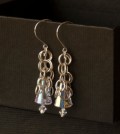 Free Pattern: Long crystal round maille earrings by Kylie Jones
by Judy Ellis, Wirejewelry.com Wire Jewelry Pattern for August...
- August 3, 2017
-
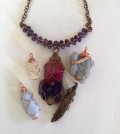 Free Pattern: Stone Twist Wrap by Karen Meador
by Judy Ellis, Wirejewelry.com Wire Jewelry Pattern for July...
- July 31, 2017
-
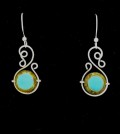 Free Pattern: Floating Bead Earrings By Kimberly Newman
by Judy Ellis, Wirejewelry.com Wire Jewelry Pattern for July...
- July 27, 2017
Featured Tools
-
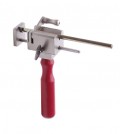 Get to Know Your Hand Tools – Tube-Cutting Jig By Helen I. Driggs
by Judy Ellis, Wirejewelry.com Wire Jewelry Tip for August...
- August 4, 2017
-
 Wire Jewelry Video: Using Punch Pliers by Judy Freyer Thompson
by Judy Ellis, Wirejewelry.com Wire Jewelry Tip for August...
- August 2, 2017
-
 Wire Jewelry Video: Aligning a Hole Punch by Judy Freyer Thompson
by Judy Ellis, Wirejewelry.com Wire Jewelry Tip for July...
- July 26, 2017
-
 Get to Know Your Hand Tools – Wire Cutters – Helen I. Driggs
by Judy Ellis, Wirejewelry.com Wire Jewelry Tip for July...
- July 25, 2017