



- NEW DVD Series – Stone Setting with Bezels
- Tube Set Charm by Kim St. Jean
- Prong Basket Pendant by Kim St. Jean
- NEW DVD Series – Stone Setting with Cold Connections
- New DVD Series – Stone Setting with Wire
- NEW DVD Series: Introduction to Stone Setting by Kim St. Jean
- Featured Tool: Bracelet Bending Plier
- NEW Dvd by Eva Sherman
- Fun, Fast Fold Forming DVD Series
- Double Band Ear Cuff from Alex Simkin
All posts tagged "findings"
-
Wire Jewelry Ideas: Homemade Headpins and Eyepins
by Rose Marion, Wire-Sculpture.com Wire Jewelry Resource for December 26, 2012 Homemade Headpins Commercially-made eye pins and headpins are a big time-saver if you’ve got a lot of earrings or charms to make. But if you’re not...
- Posted December 26, 2012
-
Daily Wire Tip Feb. 20: Copper Snapsets
Daily Wire Jewelry Making Tip for February 20, 2011 Question: Do you have copper snapsets? If so, what are the pros and cons? -Ellie in Mechanicsville, Virginia Answer: No, Ellie, we do not carry copper snapsets. Your...
- Posted February 19, 2011
-
Daily Wire Tip Nov. 21: Headpin Gauges
Daily Wire Jewelry Making Tip for November 21, 2010 Question: When ordering headpins, I’ve stuck to 22-gauge as noted in several of your patterns. But there’s quite an array of available sizes from my supplier, from .025″...
- Posted November 20, 2010
-
Daily Wire Tip Oct. 30: Child-Safe Necklaces
Daily Wire Jewelry Making Tip for October 30, 2010 Question: I want to make a safe necklace for a child. On the one hand, I want it to stay together; on the other hand, I want it...
- Posted October 29, 2010
-
Daily Wire Tip Oct. 25: Match or Clash? Clasps with Colored Wire
Daily Wire Jewelry Making Tip for October 25, 2010 Question: When using colored wire/jump rings, what is the best color choice for clasps, etc? -Meredith in Calgary, Alberta Answer: As the designer, you will be the one...
- Posted October 24, 2010
-
Daily Wire Tip Sept. 12: Bracelet Hook Ideas
Daily Wire Jewelry Making Tip for September 12, 2010 Question: I make freeform sterling silver wire wrapped bracelets. One end is a spiral, the other is formed into a hook. Any tips on making the hook look...
- Posted September 11, 2010
-
Daily Wire Tip: Snapset Size Hints
Daily Wire Jewelry Making Tip Question: I have some lovely 5mm CZs that I would like to use. Which would be better to use to set these, 4mm snapsets or 6mm snapsets? Many thanks. -Elaine in DeWitt,...
- Posted September 7, 2010
-
Daily Wire Tip Aug. 27: Silver and Nickel in Ear Wires
Daily Wire Jewelry Making Tip August 27, 2010 Question: When making my earrings I had ordered Sterling Silver ear wires and lo and behold, they made everyone’s ears turn red and itch! Mine too! So in making...
- Posted August 26, 2010
-
Daily Wire Tip Aug. 23: Making Tiny Headpins Larger
Daily Wire Jewelry Making Tip August 23, 2010 Question: I have a lot of head pins with very, very small heads – they slip right through bead holes. Is there a way to make the heads larger...
- Posted August 22, 2010
-
Daily Wire Tip Aug. 16: How to Use a Snapset
Daily Wire Jewelry Making Tip August 16, 2010 Question: How do I use snapsets in wire jewelry? I am not sure how they work. -Donna in Burlington, Connecticut Answer: Snapsets are silver or gold prong settings for...
- Posted August 15, 2010
-
Daily Wire Tip Aug. 15: Snapsets and Kiln-Fired Glass
Daily Wire Jewelry Making Tip August 15, 2010 Question: Can you use kiln-fired glass pieces you make yourself in snapsets? -Diane in Nuevo, California Answer: I see no reason you couldn’t use snapsets on your handcrafted glass....
- Posted August 14, 2010
-
Daily Tip July 10: Glue for Finishing Cords
Daily Wire Jewelry Making Tip July 10, 2010 Question: I’m a beginner. I made some leather/suede necklaces, and had a very hard time flattening or attaching the spring cord ends. I damaged two pliers and one cutter....
- Posted July 9, 2010
-
Daily Tip July 7: Handmade Wire Clasps
Daily Wire Jewelry Making Tip July 7, 2010 Question: I was wondering what your favorite wire clasp is? Personally, I don’t care for the “S” clasp. It seems to come loose and then fall off. I don’t...
- Posted July 6, 2010
-
Daily Tip June 24: Wire Wrapping a Coin
Daily Wire Jewelry Making Tip June 24, 2010 Question: I would like to make a bracelet with my Indian Head nickel, but I cannot find a snapset that will fit. I was told it measures 21–but I...
- Posted June 23, 2010
-
Daily Wire Tip: Type of Wire for Neck Wire Pendants
Daily Wire Jewelry Making Tip Question: I want to make neck wires for pendants. I have several, and most seem to be made of 2mm or 3mm square wire. What kind of wire would you suggest for...
- Posted June 11, 2010

Wire Jewelry Ideas
-
 See Yourself as a Creative Thinker-Part IV By Karen Meador, PhD
Wire Jewelry Article for September 27th, 2017 If...
- September 27, 2017
-
 See Yourself as a Creative Thinker-Part III By Karen Meador, PhD
Wire Jewelry Article for September 20th, 2017 If...
- September 20, 2017
-
 See Yourself as a Creative Thinker-Part II By Karen Meador, PhD
Wire Jewelry Article for September 13th, 2017 If you...
- September 13, 2017
-
 See Yourself as a Creative Thinker By Karen Meador PhD
Wire Jewelry Article for September 6th, 2017 This is...
- September 6, 2017

Design & Inspiration
-
 Free Pattern: Smile Cluster Necklace by Karen Meador
by Judy Ellis, Wirejewelry.com Wire Jewelry Pattern for August...
- August 7, 2017
-
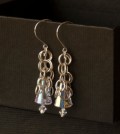 Free Pattern: Long crystal round maille earrings by Kylie Jones
by Judy Ellis, Wirejewelry.com Wire Jewelry Pattern for August...
- August 3, 2017
-
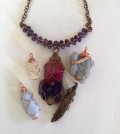 Free Pattern: Stone Twist Wrap by Karen Meador
by Judy Ellis, Wirejewelry.com Wire Jewelry Pattern for July...
- July 31, 2017
-
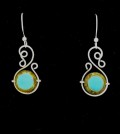 Free Pattern: Floating Bead Earrings By Kimberly Newman
by Judy Ellis, Wirejewelry.com Wire Jewelry Pattern for July...
- July 27, 2017
Featured Tools
-
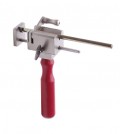 Get to Know Your Hand Tools – Tube-Cutting Jig By Helen I. Driggs
by Judy Ellis, Wirejewelry.com Wire Jewelry Tip for August...
- August 4, 2017
-
 Wire Jewelry Video: Using Punch Pliers by Judy Freyer Thompson
by Judy Ellis, Wirejewelry.com Wire Jewelry Tip for August...
- August 2, 2017
-
 Wire Jewelry Video: Aligning a Hole Punch by Judy Freyer Thompson
by Judy Ellis, Wirejewelry.com Wire Jewelry Tip for July...
- July 26, 2017
-
 Get to Know Your Hand Tools – Wire Cutters – Helen I. Driggs
by Judy Ellis, Wirejewelry.com Wire Jewelry Tip for July...
- July 25, 2017