



- NEW DVD Series – Stone Setting with Bezels
- Tube Set Charm by Kim St. Jean
- Prong Basket Pendant by Kim St. Jean
- NEW DVD Series – Stone Setting with Cold Connections
- New DVD Series – Stone Setting with Wire
- NEW DVD Series: Introduction to Stone Setting by Kim St. Jean
- Featured Tool: Bracelet Bending Plier
- NEW Dvd by Eva Sherman
- Fun, Fast Fold Forming DVD Series
- Double Band Ear Cuff from Alex Simkin
All posts tagged "gauge"
-
What Type of Wire Should I Use?
by Judy Ellis, Wire-Sculpture.com Wire Jewelry Tip for October 24, 2014 What type of Wire Should I Use? We’ve been revisiting a few of our older posts, and here’s a great one that might help answer a...
- Posted October 24, 2014
-
Featured Tool Sept. 24: Digital Caliper GAU-179.00
by Rose Marion, Wire-Sculpture.com Tool of the Week for September 24, 2012 This week’s tool: 9-1/4" Digital Caliper, #GAU-179.00 Video by Kate, JewelryTools.com This week’s featured tool from JewelryTools.com is the 9-1/4" Digital Caliper GAU-179.00. No squinting...
- Posted September 24, 2012
-
Featured Tool of the Week: Finger Gauge GAU-251.00
by Rose Marion, Wire-Sculpture.com Tool of the Week for January 9, 2012 sponsored by JewelryTools.com This week’s tool: Finger Gauges, Item # GAU-251.00 Demonstration by Kate, JewelryTools.com This week’s featured tool from JewelryTools.com is the GAU-251.00 Finger...
- Posted January 9, 2012
-
Daily Wire Tip July 5: Large Hole Pearls for Wire Bracelets
Daily Wire Jewelry Making Tip for July 5, 2011 Question: Dear Dale: Thank you for your clear teaching style; your directions are the best! I’ve been looking at the Pearl Link Bracelet video (one of the series...
- Posted July 4, 2011
-
Daily Wire Tip Mar. 13: One Jump Ring Gauge to Rule Them All?
Daily Wire Jewelry Making Tip for March 13, 2011 Question: What gauge wire is best for jump rings for chain maille designs? -Linda in Alum Creek, West Virginia Answer: I am sorry to tell you, Linda, that...
- Posted March 12, 2011
-
Daily Wire Tip Mar. 8: Specific Wire Gauges in Class
Daily Wire Jewelry Making Tip for March 8, 2011 Question: I’ve started taking wire classes and each teacher asks for specific sizes, such as 21-gauge. Seems like each class wants a different size, and it’s never the...
- Posted March 7, 2011
-
Daily Wire Tip Mar. 2: Crochet Wire Designs
Daily Wire Jewelry Making Tip for March 2, 2011 Question: What is the best gauge wire to use for crocheting wire? I used a 26-gauge copper wire for a bracelet once, and it stretched out as I...
- Posted March 1, 2011
-
Daily Wire Tip Jan. 13: Large Hole Pearls for Necklaces
Daily Wire Jewelry Making Tip for January 13, 2011 Question: I would like to use pearls to make a leather knotted necklace. Where would I find pearls that I could use? -Judy in Monroe, Louisiana Answer: Hi...
- Posted January 12, 2011
-
Daily Wire Tip Dec. 12: Copper Hat Pins
Daily Wire Jewelry Making Tip for December 12, 2010 Question: I wish to make hat pins with copper wire. Could you tell me what temper and gauge I should use to take beads, and not bend? -Bev...
- Posted December 11, 2010
-
Daily Wire Tip: Wire Gauges for Chunky Rings
Daily Wire Jewelry Making Tip Question: What gauge of sterling silver is best for wire wrapping rings? I want my rings to be a little chunky. -Alice in Denton, Texas Answer: Well Alice, the diameter of wire...
- Posted November 24, 2010
-
Daily Wire Tip Nov. 22: Intro to Gauges
Daily Wire Jewelry Making Tip for November 22, 2010 Question: As a beginner, I would like to know the right gauge of wire I should practice with. I have been shown in 24 and 22-gauge copper to...
- Posted November 21, 2010
-
Daily Wire Tip July 15: Developing a Wire Instinct
Daily Wire Jewelry Making Tip July 15, 2010 Question: I’m still trying to understand the uses of different gauges and shapes of wire and their uses. If I am pleased with how my design came out, whether...
- Posted July 14, 2010
-
Daily Tip June 15: What’s My Wire’s Circumference?
Daily Wire Jewelry Making Tip June 15, 2010 Question: I want to use my Dremel rotary tool to twist wire. There is a chuck available that takes items with a circumference of 1/32 inch to 1/8 inch....
- Posted June 14, 2010
-
Daily Wire Tip June 1: Argentium Wire
Daily Wire Jewelry Making Tip June 01, 2010 Question: I’m looking for a silver wire won’t tarnish, but shine brightly, about 26-gauge, 14-gauge, or 10-gauge. I like the jewelry for sale in Swarovski stores, and I always wonder...
- Posted June 1, 2010
-
Daily Wire Tip May 15: Working From the Coil
Daily Wire Jewelry Making Tip May 15, 2010 Question: How do I make long earring wires from bulk lengths of sterling wire? What gauge and how do you get smooth ends? Answer: I am thinking that you are...
- Posted May 15, 2010
-
Daily Wire Tip May 10: Fabric Covered Wire
Daily Wire Jewelry Making Tip May 10, 2010 Question: I have been unable to locate a fabric type covered stiff wire in bright colors that holds its shape. I want to make necklaces with only a few beads....
- Posted May 10, 2010

Wire Jewelry Ideas
-
 See Yourself as a Creative Thinker-Part IV By Karen Meador, PhD
Wire Jewelry Article for September 27th, 2017 If...
- September 27, 2017
-
 See Yourself as a Creative Thinker-Part III By Karen Meador, PhD
Wire Jewelry Article for September 20th, 2017 If...
- September 20, 2017
-
 See Yourself as a Creative Thinker-Part II By Karen Meador, PhD
Wire Jewelry Article for September 13th, 2017 If you...
- September 13, 2017
-
 See Yourself as a Creative Thinker By Karen Meador PhD
Wire Jewelry Article for September 6th, 2017 This is...
- September 6, 2017

Design & Inspiration
-
 Free Pattern: Smile Cluster Necklace by Karen Meador
by Judy Ellis, Wirejewelry.com Wire Jewelry Pattern for August...
- August 7, 2017
-
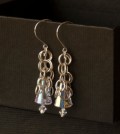 Free Pattern: Long crystal round maille earrings by Kylie Jones
by Judy Ellis, Wirejewelry.com Wire Jewelry Pattern for August...
- August 3, 2017
-
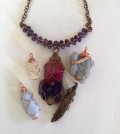 Free Pattern: Stone Twist Wrap by Karen Meador
by Judy Ellis, Wirejewelry.com Wire Jewelry Pattern for July...
- July 31, 2017
-
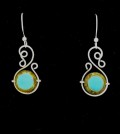 Free Pattern: Floating Bead Earrings By Kimberly Newman
by Judy Ellis, Wirejewelry.com Wire Jewelry Pattern for July...
- July 27, 2017
Featured Tools
-
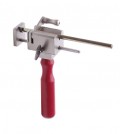 Get to Know Your Hand Tools – Tube-Cutting Jig By Helen I. Driggs
by Judy Ellis, Wirejewelry.com Wire Jewelry Tip for August...
- August 4, 2017
-
 Wire Jewelry Video: Using Punch Pliers by Judy Freyer Thompson
by Judy Ellis, Wirejewelry.com Wire Jewelry Tip for August...
- August 2, 2017
-
 Wire Jewelry Video: Aligning a Hole Punch by Judy Freyer Thompson
by Judy Ellis, Wirejewelry.com Wire Jewelry Tip for July...
- July 26, 2017
-
 Get to Know Your Hand Tools – Wire Cutters – Helen I. Driggs
by Judy Ellis, Wirejewelry.com Wire Jewelry Tip for July...
- July 25, 2017