



- NEW DVD Series – Stone Setting with Bezels
- Tube Set Charm by Kim St. Jean
- Prong Basket Pendant by Kim St. Jean
- NEW DVD Series – Stone Setting with Cold Connections
- New DVD Series – Stone Setting with Wire
- NEW DVD Series: Introduction to Stone Setting by Kim St. Jean
- Featured Tool: Bracelet Bending Plier
- NEW Dvd by Eva Sherman
- Fun, Fast Fold Forming DVD Series
- Double Band Ear Cuff from Alex Simkin
All posts tagged "soft"
-
Daily Wire Tip July 14: What Stones Can Be Tumbled?
Daily Wire Jewelry Making Tip for July 14, 2011 Question: I’ve tried several sites for this question, and can’t get a straight answer, just generalities. I have a tumbler, wet, and I need to know what I...
- Posted July 13, 2011
-
Daily Wire Tip June 4: How to Make Wires Lay Flat
Daily Wire Jewelry Making Tip June 04, 2010 Question: I am trying to make the bracelet that is the first project on your Beginner’s DVD. I am having great difficulty keeping all the wires together. I keep straightening...
- Posted June 4, 2010
-
Daily Wire Tip May 18: When to Use Dead Soft Wire
Daily Wire Jewelry Making Tip May 18, 2010 Question: I have seen confusing information on what type of wire to use for various projects. Could you tell me when it is best to use dead soft wire? For...
- Posted May 18, 2010
-
Daily Wire Tip May 12: Hammered Dangle for Earrings or Necklace
Daily Wire Jewelry Making Tip May 12, 2010 Question: I’m new to making jewelry with wire and am trying to learn all I can. Your tips are great! What gauge and temper wire would I use to create...
- Posted May 12, 2010
-
Daily Wire Tip April 25: Forging Copper Wire
Daily Wire Jewelry Making Tip April 25, 2010 Question: I shaped a choker wire from 14g dead soft round copper wire. What’s the best way to harden it so the choker retains its shape? Answer: The easiest (and...
- Posted April 25, 2010
-
Daily Wire Tip March 29: Forging Wire
Daily Wire Jewelry Making Tip March 29, 2010 Question: I’m wondering why anyone forges wire. Answer: Wire jewelry makers ‘forge’ wire for several reasons as it shapes, stretches and hardens any metal used. One example can be...
- Posted March 29, 2010

Wire Jewelry Ideas
-
 See Yourself as a Creative Thinker-Part IV By Karen Meador, PhD
Wire Jewelry Article for September 27th, 2017 If...
- September 27, 2017
-
 See Yourself as a Creative Thinker-Part III By Karen Meador, PhD
Wire Jewelry Article for September 20th, 2017 If...
- September 20, 2017
-
 See Yourself as a Creative Thinker-Part II By Karen Meador, PhD
Wire Jewelry Article for September 13th, 2017 If you...
- September 13, 2017
-
 See Yourself as a Creative Thinker By Karen Meador PhD
Wire Jewelry Article for September 6th, 2017 This is...
- September 6, 2017

Design & Inspiration
-
 Free Pattern: Smile Cluster Necklace by Karen Meador
by Judy Ellis, Wirejewelry.com Wire Jewelry Pattern for August...
- August 7, 2017
-
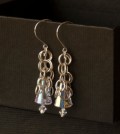 Free Pattern: Long crystal round maille earrings by Kylie Jones
by Judy Ellis, Wirejewelry.com Wire Jewelry Pattern for August...
- August 3, 2017
-
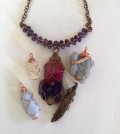 Free Pattern: Stone Twist Wrap by Karen Meador
by Judy Ellis, Wirejewelry.com Wire Jewelry Pattern for July...
- July 31, 2017
-
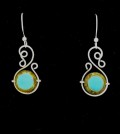 Free Pattern: Floating Bead Earrings By Kimberly Newman
by Judy Ellis, Wirejewelry.com Wire Jewelry Pattern for July...
- July 27, 2017
Featured Tools
-
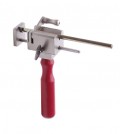 Get to Know Your Hand Tools – Tube-Cutting Jig By Helen I. Driggs
by Judy Ellis, Wirejewelry.com Wire Jewelry Tip for August...
- August 4, 2017
-
 Wire Jewelry Video: Using Punch Pliers by Judy Freyer Thompson
by Judy Ellis, Wirejewelry.com Wire Jewelry Tip for August...
- August 2, 2017
-
 Wire Jewelry Video: Aligning a Hole Punch by Judy Freyer Thompson
by Judy Ellis, Wirejewelry.com Wire Jewelry Tip for July...
- July 26, 2017
-
 Get to Know Your Hand Tools – Wire Cutters – Helen I. Driggs
by Judy Ellis, Wirejewelry.com Wire Jewelry Tip for July...
- July 25, 2017