



- NEW DVD Series – Stone Setting with Bezels
- Tube Set Charm by Kim St. Jean
- Prong Basket Pendant by Kim St. Jean
- NEW DVD Series – Stone Setting with Cold Connections
- New DVD Series – Stone Setting with Wire
- NEW DVD Series: Introduction to Stone Setting by Kim St. Jean
- Featured Tool: Bracelet Bending Plier
- NEW Dvd by Eva Sherman
- Fun, Fast Fold Forming DVD Series
- Double Band Ear Cuff from Alex Simkin
All posts tagged "twisting wire"
-
Daily Wire Tip: Twisting a Length of Wire Evenly
Daily Wire Jewelry Making Tip Question: Hi, I’m new to wire working and I purchased the Jump Start series. I also purchased the G10-22 sliding pin vise. I watched your video on using a pin vise, and...
- Posted August 14, 2011
-
Daily Wire Tip Jan. 16: Twisting Wire Evenly
Daily Wire Jewelry Making Tip for January 16, 2011 Question: I have purchased your Beginner Series and am having a great time with the projects. My question is this: In your videos your twisted wire looks perfect...
- Posted January 15, 2011
-
Daily Wire Tip Oct. 28: Twisted Wire Tips
Daily Wire Jewelry Making Tip for October 28, 2010 Question: I am enjoying and learning a lot from your daily wire tips. I watched the tutorial video How to Make a Double Wrapped Hook. The demonstrator was...
- Posted October 27, 2010
-
Daily Wire Tip July 26: Pattern Help
Daily Wire Jewelry Making Tip July 26, 2010 Question: A few patterns I have call for 14-gauge “twisted wire,” with no further explanation. Does it mean a 14-gauge square or half round wire, twisted? I also have...
- Posted July 25, 2010
-
Daily Tip June 15: What’s My Wire’s Circumference?
Daily Wire Jewelry Making Tip June 15, 2010 Question: I want to use my Dremel rotary tool to twist wire. There is a chuck available that takes items with a circumference of 1/32 inch to 1/8 inch....
- Posted June 14, 2010
-
Video Tip on Rescuing Wire from Wire-Sculpture.com!
Have you ever been wrapping along, when suddenly your pliers take a wrong turn? Or maybe you started a pattern, but it didn’t turn out right. There has to be a way to save this wire! Dale...
- Posted May 10, 2010
-
Getting Twisted – Jewelry Making Tools
Twisted wire can add style, dimension, and elegance, flash or fun to a wire jewelry design. Sometimes twisted wire is a major player, placed where it is to be seen and sometimes it is added in obscure...
- Posted February 17, 2010
-
Daily Wire Tip Nov. 29: How to Prevent Pin Vise From Breaking Wires
Daily Wire Jewelry Making Tip November 29, 2009 Last Day of The 3 Day Thanksgiving Sale – Don’t Miss Out! Question: I have a pin vise to twist wire, but every time I try to use it,...
- Posted November 29, 2009
-
Daily Wire Tip Sept. 29: Can I Twist Gold Filled Wire?
Daily Wire Jewelry Making Tip September 29, 2009 Question: Can I twist gold filled wire without damaging it? Answer: Yes, you can twist individual strands or combination of gold-filled wire with no resulting damage. Answer contributed by...
- Posted September 29, 2009

Wire Jewelry Ideas
-
 See Yourself as a Creative Thinker-Part IV By Karen Meador, PhD
Wire Jewelry Article for September 27th, 2017 If...
- September 27, 2017
-
 See Yourself as a Creative Thinker-Part III By Karen Meador, PhD
Wire Jewelry Article for September 20th, 2017 If...
- September 20, 2017
-
 See Yourself as a Creative Thinker-Part II By Karen Meador, PhD
Wire Jewelry Article for September 13th, 2017 If you...
- September 13, 2017
-
 See Yourself as a Creative Thinker By Karen Meador PhD
Wire Jewelry Article for September 6th, 2017 This is...
- September 6, 2017

Design & Inspiration
-
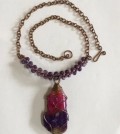 Free Pattern: Smile Cluster Necklace by Karen Meador
by Judy Ellis, Wirejewelry.com Wire Jewelry Pattern for August...
- August 7, 2017
-
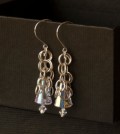 Free Pattern: Long crystal round maille earrings by Kylie Jones
by Judy Ellis, Wirejewelry.com Wire Jewelry Pattern for August...
- August 3, 2017
-
 Free Pattern: Stone Twist Wrap by Karen Meador
by Judy Ellis, Wirejewelry.com Wire Jewelry Pattern for July...
- July 31, 2017
-
 Free Pattern: Floating Bead Earrings By Kimberly Newman
by Judy Ellis, Wirejewelry.com Wire Jewelry Pattern for July...
- July 27, 2017
Featured Tools
-
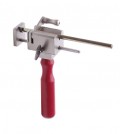 Get to Know Your Hand Tools – Tube-Cutting Jig By Helen I. Driggs
by Judy Ellis, Wirejewelry.com Wire Jewelry Tip for August...
- August 4, 2017
-
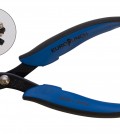 Wire Jewelry Video: Using Punch Pliers by Judy Freyer Thompson
by Judy Ellis, Wirejewelry.com Wire Jewelry Tip for August...
- August 2, 2017
-
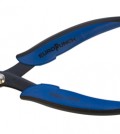 Wire Jewelry Video: Aligning a Hole Punch by Judy Freyer Thompson
by Judy Ellis, Wirejewelry.com Wire Jewelry Tip for July...
- July 26, 2017
-
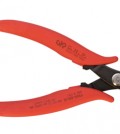 Get to Know Your Hand Tools – Wire Cutters – Helen I. Driggs
by Judy Ellis, Wirejewelry.com Wire Jewelry Tip for July...
- July 25, 2017